25 November 2026
Developing a Transportation spend management Routine
Presented by @keeganifss104
Transport expenses can be difficult to review regularly when billings, shipment documents, accessorial fees, and carrier contracts are stored across different systems. A repeatable procedure gives groups a clearer way to recognize unusual charges, verify billing accuracy, and understand where transportation expenses are transforming.
The goal is not simply to seek isolated mistakes. A beneficial routine links invoice evaluation with delivery activity, contract terms, and functional choices so that searchings for can educate future transportation preparation.
FreightOptics deals Transportation spend management.
Specify the extent of each review
Begin by choosing which transport activity the process will certainly cover. This might include parcel, products, carrier, or other transportation invoices, relying on the organization's delivery account. Establishing the extent prevents the review from coming to be an inconsistent check of whichever information takes place to be simplest to access.
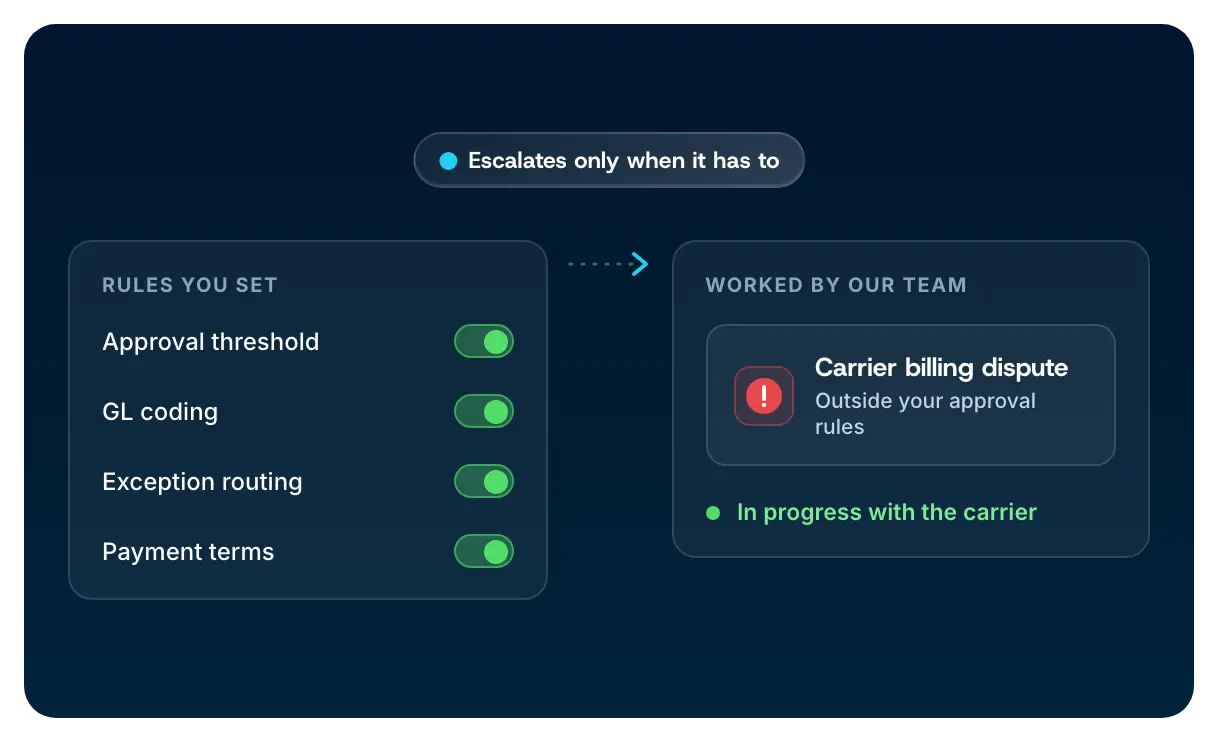
It is also practical Transportation Spend Management to define the review duration and the accountable individuals. Money might provide billing information, logistics may discuss delivery information, and procurement may clarify discussed terms. Clear ownership makes it less complicated to keep the regular and follow up on findings.
Bring the right documents with each other
A functional transportation expense review relies on comparing associated records. Invoices can be evaluated along with delivery details, carrier agreements, rate schedules, shipment details, and authorized accessorial charges. When these sources are reviewed individually, inaccurate quantities or missing credit scores may be harder to identify.
Constant information fields make the procedure more useful gradually. Standardizing items such as provider names, solution degrees, shipment dates, referral numbers, and charge groups can assist teams contrast task from one review cycle to the next. The procedure does not require to begin with an intricate reporting system; it requires reliable information set up in a useful format.
Examine typical sources of variance
Each review ought to include a consistent collection of checks. Groups may compare billed rates with applicable contracts, validate that solutions were really utilized, analyze replicate invoices, and testimonial accessorial fees for proper documents. They can also seek inequalities entailing weights, areas, dimensions, distribution locations, or service degrees when those information affect the quantity billed.
A checklist aids protect against the process from relying upon memory or specific judgment. In time, reoccuring searchings for can be organized by reason, such as data quality issues, contract analysis, operational changes, or provider invoicing discrepancies. This classification supports extra concentrated corrective activity.
Paper searchings for and follow-up actions
A testimonial is better when each searching for has a clear document. Record the influenced invoice or shipment, the issue identified, the supporting information, and the activity requested. Relying on the circumstance, the following action may involve asking for an improvement, making clear an agreement term, updating an internal procedure, or reviewing a persisting pattern with a service provider.
Designating an owner and a follow-up day helps keep findings from being lost after the first testimonial. An easy status system can show whether an item is under examination, waiting for a feedback, resolved, or being kept an eye on for recurrence.
Utilize the routine to enhance decisions
As soon as the procedure is developed, evaluate the outcomes for broader patterns as opposed to dealing with every issue as a different occasion. Repetitive accessorial fees may point to packaging or getting practices, while frequent service-level mismatches may suggest that delivery selections require closer attention. These observations can provide logistics, financing, and procurement a shared basis for conversation.
FreightOptics provides 3rd Event Logistics Audit services to support organizations that require an organized way to take a look at transport billing and relevant records. By making transportation spend management a normal business activity, firms can produce a much more educated review procedure and utilize its searchings for to direct continuous transport choices.
2200 N Commerce Pkwy #200, Weston, FL 33326, United States +18005784939